7 Ways to Style Lacquered Furniture for a Modern Look
Last Updated: November 1, 2026
Quick Summary
Style lacquered furniture for a modern look by treating one glossy piece as the room's anchor and pairing it with matte, light-absorbing surfaces like wool rugs, velvet, or bouclé. Keep one lacquered anchor per sightline, add a warm wood element nearby, and limit metal accents to one.
- High-gloss lacquer reflects like a mirror, satin gives a soft glow, and matte absorbs light.
- In the living room, set a matte wool or jute rug first to avoid gloss-on-gloss reflection.
- Use satin lacquer for nightstands near the bed and reserve high-gloss for pieces across the room.
- An entry console is the best first lacquered piece because it is seen briefly and at an angle.
- Pull the piece a few inches off the wall so light passes behind it and the reflection gains depth.
Table of Contents
- Start With the Finish: Gloss, Satin, and Matte
- Modern Lacquer Furniture Ideas for Every Room
- Lacquer Furniture Color Combinations That Work
- Mixing Lacquered Furniture With Wood
- How to Decorate With Black Lacquer Furniture
- Scale, Placement, and Lighting Reflections
- Common Styling Mistakes and How to Fix Them
- Building Your Styling Plan With Orvessa Global
- Frequently Asked Questions
Start With the Finish: Gloss, Satin, and Matte
Lacquered furniture is any piece sealed with a resin-based coating that cures into a hard, smooth shell, and the sheen you choose decides how the piece behaves in a room.
High-gloss lacquer acts like a mirror. It bounces light, doubles the apparent depth of a room, and pulls every eye toward it.
The Mela Aura guide to high-lacquered furniture frames glossy lacquer as a way to bring reflective surfaces, color, and texture into a space.
What Each Sheen Does to a Room
- High-gloss: maximum reflection, maximum drama. Best on a focal piece.
- Satin: subtle sheen, hides fingerprints better. Best for daily-use surfaces.
- Matte: no glare, strong color payoff. Best for large case goods.
How Lacquered Furniture Is Made
Makers build up thin coats over a sealed frame, sanding between layers until the surface is glass-smooth. The final coat determines the sheen. That layered build is why lacquer resists scuffs better than paint, and why refinishing is a job for a professional rather than a weekend project.
If you are planning a whole room around one glossy piece, our guide to designing cohesive luxury living spaces walks through the full step-by-step process.
Modern Lacquer Furniture Ideas for Every Room
Most guides stop at "put a glossy piece in each room." That is not a plan. What follows is a room-by-room sequence you can actually execute, with the decision order that keeps a modern look from tipping into showroom. The rule across every room: one lacquered anchor per sightline, and every other surface chosen to either absorb or contrast with its shine.
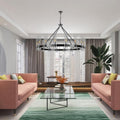
Living Room: Anchor, Then Absorb
- Choose the anchor. A lacquered console, coffee table, or media cabinet. Pick the piece that sits on the room's main sightline from the doorway.
- Set the floor first. A matte wool or jute rug under and around the piece kills the double-reflection problem of gloss on gloss.
- Add one light-absorbing upholstery. Matte velvet, bouclé, or heavy linen. Velvet is the strongest partner because it swallows light while lacquer throws it back.
- Add one warm wood element within three feet of the lacquer piece so the eye has a temperature contrast.
- Stop at one metal accent. Brass or aged bronze reads warmer than chrome against most lacquer colors.
A common pattern in well-styled living rooms is a glossy console against a matte wall, with a single lamp whose shade sits below the top of the console so the reflection reads as depth rather than glare.
Dining Room: Reflect the Light Source, Not the Clutter
A high-gloss dining table works when it mirrors something worth seeing. Position the table so its surface catches the chandelier or a window, not a cluttered side wall. Keep the surrounding chairs matte, woven cane, leather, or matte-finished wood, so the table remains the only reflective plane. If the table is satin rather than high-gloss, you can add a lacquered sideboard on the same wall without the two fighting.
Bedroom: Satin Near the Bed, Gloss Across the Room
Glare next to a pillow is a real problem. Use satin lacquer for nightstands and dressers within arm's reach of the bed, and reserve high-gloss for a piece across the room, a wardrobe, a bench at the foot of the bed, or a dresser on the far wall. Keep bedding matte and layer one woven texture (a cane headboard, a rattan bench) to soften the polish.
Entryway: The Highest-Impact, Lowest-Risk Spot
An entry console is the best first lacquered piece for most homes because it is seen briefly and at an angle, which flatters gloss. Pair a high-gloss console with a matte runner, a single warm wood stool, and a mirror hung so it reflects the console's top rather than a blank wall. This is also the room where a bold color, deep green, oxblood, or navy, carries the least risk.
If you are planning a whole room around one glossy piece, our guide to designing cohesive luxury living spaces walks through the full step-by-step process.
Lacquer Furniture Color Combinations That Work
The safest lacquer furniture color combinations pair one saturated glossy tone with warm neutrals. A bold lacquer needs quiet neighbors, or the room turns loud.
Try these pairings:
- Black lacquer + ivory upholstery + warm wood: graphic and modern.
- Bright lacquer + grasscloth walls: color with texture underneath it.
- Deep navy or green + brass accents: sophisticated without shouting.
Z Gallerie's styling notes on lacquer furniture recommend exactly that black-and-ivory combination with warm wood, keeping forms straightforward. We agree, and we would add one rule: pick your accent color from something already in the room, such as artwork or a rug, so the lacquer looks intentional.
Mixing Lacquered Furniture With Wood
Mixing lacquered furniture with wood is the fastest way to stop a glossy piece from looking cold. Wood grain gives the eye somewhere to rest.
The trick is contrast in sheen, not in era. A high-gloss lacquer cabinet next to a matte hardwood floor works.
- Keep wood tones warm to soften black or cool lacquer.
- Use one wood species per room so the mix reads deliberate.
- Let the lacquer piece sit slightly apart from the wood, not crowded against it.
A common mistake is matching lacquer to wood color. Skip that. You want tension between the two surfaces, not a near-match that looks like a failed attempt.
How to Decorate With Black Lacquer Furniture
To decorate with black lacquer furniture, treat the piece as the room's sharpest line and keep everything around it softer.
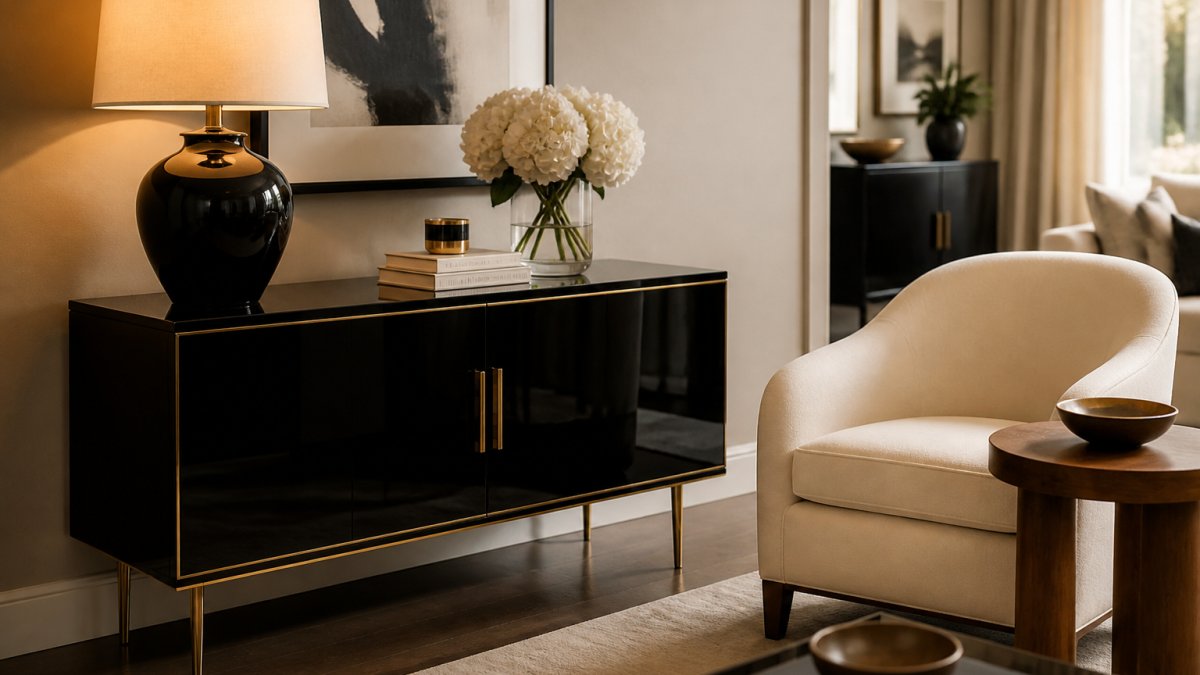
Start with texture. Pair black lacquer with grasscloth, bouclé, linen, or black leather so the shine has something to push against.
Where people go wrong is adding more gloss: a glass table, a chrome lamp, a mirrored tray. Now the room has no soft edge left.
Scale, Placement, and Lighting Reflections
A glossy surface is a second room reflected back at you. Scale, placement, and lighting decide whether that reflection reads as depth or as a mistake. Here is the mechanism, then the moves.
How Light Behaves on a Lacquered Surface
High-gloss lacquer reflects at roughly the angle light hits it. That means the piece mirrors whatever sits opposite it at the same height, a window, a wall, a sofa, a pile of clutter.
Natural light changes through the day. A west-facing window will throw a hard, moving highlight across a gloss top in the afternoon; an east-facing window gives a softer morning glow.
Scale: Size the Piece to the Reflection
- In small rooms, keep the glossy surface below eye level. A low console or coffee table reflects the floor and rug, which reads as calm. A tall gloss cabinet reflects the ceiling and the room's busiest wall.
- In large rooms, a tall gloss piece can anchor a double-height wall because the reflection adds visual volume rather than clutter.
- Match the piece to the wall it sits against. A console should run roughly two-thirds to three-quarters of the width of the wall or the sofa it faces; narrower looks accidental, wider looks built-in.
Placement: Leave Room for the Reflection to Read
- Pull the piece a few inches off the wall so light can pass behind it and the reflection gains depth.
- Keep the surface clear of small objects that will double in the reflection. One lamp, one tray, one book stack is enough.
- Face the piece toward something worth mirroring, a window, a piece of art, a clean wall, not toward a cluttered shelf or a TV.
Lighting: Build a Deliberate Highlight
- Place a lamp so its shade sits just below or beside the top edge of the piece. The glow lands on the surface without a hot spot in the viewer's eye.
- Use a warm bulb (around 2700K) near black or dark lacquer; cool light makes dark gloss read flat and gray.
- Avoid pointing a downlight straight at a gloss top, it creates a glare patch that hides the finish. Angle accent lights across the surface instead.
Better Homes & Gardens on balancing glossy surfaces makes the same point about pairing high-gloss pieces with matte materials like wood or natural stone. That balance is what keeps a polished room from feeling like a lobby.
Common Styling Mistakes and How to Fix Them
Most styling mistakes with lacquered furniture come from overdoing one good idea. Here is the short list we see most often, with the fix for each.
| Mistake | Why it fails | Fix |
|---|---|---|
| Two or more gloss pieces in one sightline | Reflections compete and the room feels hard | Keep one glossy anchor per view |
| Glossy lacquer on a glossy floor | The sheen has no contrast | Add a matte rug underneath |
| Cool gray walls behind black lacquer | The piece looks flat and cold | Switch to warm tones or grasscloth |
| Crowding the piece against a wall | Kills the reflection and the visual balance | Pull it out and let light pass behind |
| Skipping care and cleaning | Water rings and scuffs dull the finish | Wipe with a soft damp cloth, dry immediately |
Watch out: water rings and heat marks set into lacquer fast, and restoration is a specialist job. Use coasters and trivets from day one.
Building Your Styling Plan With Orvessa Global
A styling plan starts with one decision: which piece in the room deserves the shine.
Orvessa Global offers curated furnishings for homeowners, designers, and hospitality professionals, with volume pricing, dedicated account management, and white-glove delivery for trade and hospitality projects.
Start with the finish, choose your accent color from what you already own, and let one glossy piece carry the room.
Frequently Asked Questions
How do you decorate a room with lacquered furniture without it looking too formal?
Balance the shine with matte textures. Pairing high-gloss lacquered surfaces with matte materials such as wood or natural stone keeps a room from feeling overly polished. Add grasscloth wallcovering, a wool rug, or linen upholstery, and keep silhouettes simple. A single glossy piece against several matte surfaces reads modern rather than formal, and it gives the eye somewhere to rest.
What colors go well with black lacquered furniture?
Ivory, warm wood tones, and soft neutrals are the safest pairings. Combining black lacquer with ivory upholstery and warm wood creates a graphic modern look. For more contrast, try a muted olive or deep navy accent. Avoid stacking several dark glossy pieces in one room; one black lacquer anchor plus lighter surrounding surfaces keeps the scheme from feeling heavy.
Can lacquered furniture work in a modern interior alongside wood pieces?
Yes, and the contrast is the point. Mixing lacquered furniture with wood works best when you vary sheen deliberately: a glossy lacquer cabinet next to a matte oak dining table, for example. Match undertones so the wood and lacquer do not fight, and repeat one wood species across the room. Keep the lacquer piece as the accent rather than covering every surface in gloss.
How do you style a lacquered piece as a focal point?
Give it space and light. Place the piece against a quieter wall, leave breathing room on either side, and aim a lamp or pendant so reflections land on the polished surface. Keep nearby decor low-contrast so the lacquer stays the star. In a dining room, a lacquered sideboard under a mirror doubles the reflective effect. One focal piece per room is enough; two competing glossy anchors split attention.
Ready to put a real plan behind the polish? Get started with Orvessa Global and build a room where every reflective surface earns its place. Explore the collection, talk to our team about your project scope, and let us handle the delivery and setup so the styling can begin the day it arrives.