How to Mix Indoor Outdoor Furniture: A Step-by-Step Guide
Table of Contents
- Assess Your Space and Define Your Vision
- Choose Durable Indoor Outdoor Furniture Sets That Work Together
- Select the Best Materials for All-Weather Furniture
- Create a Cohesive Color Palette and Textural Contrast
- Balance Indoor and Outdoor Aesthetics
- How to Style a Patio for Hospitality and Daily Living
- Maintain Your Mixed Furniture for Long-Term Durability
- Common Mistakes to Avoid When Mixing Pieces
- Frequently Asked Questions
Last Updated: September 20, 2026
Assess Your Space and Define Your Vision
Before buying pieces to mix indoor outdoor furniture, walk through your space and assess the light, traffic flow, and how people use the area.
Ask yourself these questions:
- What's the primary purpose of this space (entertaining, daily relaxation, dining)?
- How much foot traffic does it get?
- What's the climate like where you live?
- Do you want a seamless indoor-outdoor flow or distinct zones?
Your vision shapes every decision that follows. Clarity first, shopping second.
Measure doorways, windows, and sunlight patterns, a chair perfect in a showroom can feel cramped in your actual layout.
Choose Durable Indoor Outdoor Furniture Sets That Work Together
Start with a cohesive foundation: select durable indoor outdoor furniture sets that share a design language. Everything should speak the same visual dialect.
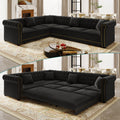
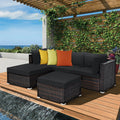
Choose flexible sets like modular sectionals that configure to fit your space and transition between indoors and outdoors.

When evaluating sets:
- Check the frame material (teak, powder-coated metal, or composite)
- Confirm cushion construction handles moisture and UV exposure
- Verify weight capacity for your intended use
- Ensure pieces can be easily moved or rearranged
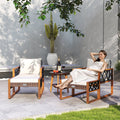
The Arno Modular Side Chair ($2,140.00), FSC teak with weather-resistant Olefin cushions, works equally well on a patio or sunroom.
Avoid the trap of buying one piece at a time. That approach leads to a space that feels accidental rather than designed. Start with a set. Build from there.
Select the Best Materials for All-Weather Furniture
Material selection determines whether your mixed furniture thrives or deteriorates. Mixing materials means mixing wear patterns, with real consequences for maintenance and replacement costs.
Weather-Resistant Fabrics and Upholstery
Choose solution-dyed acrylic or Olefin fabrics for cushions, they resist fading, mildew, and moisture absorption.
Solution-dyed fabrics have color throughout the fiber, so fading happens over years, not months. Olefin offers similar benefits with excellent UV protection.
When selecting upholstery: choose moisture-wicking fabrics for humid climates, mid-tone colors that hide dust, denser cushion cores, and removable covers for cleaning.
Powder-Coated Metal and Teak Frames
Powder-coated finishes protect metal frames.
Teak is the gold standard, its natural oils resist moisture and rot without constant sealing.
Combining teak frames with powder-coated metal accents pairs materials with vastly different lifespans.
Pair teak frames with powder-coated metal only if willing to refinish metal periodically. Mix solid wood with woven synthetics for contrast, but expect faster degradation in UV. Use concrete or stone for permanence, but seal annually.
The Bean Outdoor Patio Swing Chair ($816.07), powder-coated steel with synthetic rattan and weather-resistant cushioning, performs indoors and outdoors.
Climate-Specific Material Pairing
Climate dramatically affects material combinations. In dry regions, teak and powder-coated metal age slowly.
In high-humidity coastal climates, avoid untreated teak with bare metal fasteners, use stainless steel hardware or composite frames instead. In arid climates, prioritize solution-dyed fabrics and sealed wood for UV protection.
Understanding these climate-material interactions prevents expensive surprises and ensures your mixed pieces age gracefully rather than deteriorate unevenly.
Create a Cohesive Color Palette and Textural Contrast
A cohesive color palette transforms a collection into a designed space.
Start with neutral tones, whites, grays, beiges, soft taupes, that work in any climate and pair with nearly everything.
Build contrast through texture: combine smooth concrete with woven wicker, soft cushions with hard metal, matte with subtle sheen.
Follow the rule of three finishes: one primary (powder-coated metal), one secondary (teak or concrete), one accent (woven elements or patterned cushions).
Introduce color through cushions and textiles, not frames, this lets you refresh seasonally without replacing structural pieces.
Neutral palettes appeal to diverse guests and hide wear, essential for hospitality. Residential spaces allow more freedom, but restraint creates sophistication.
Balance Indoor and Outdoor Aesthetics
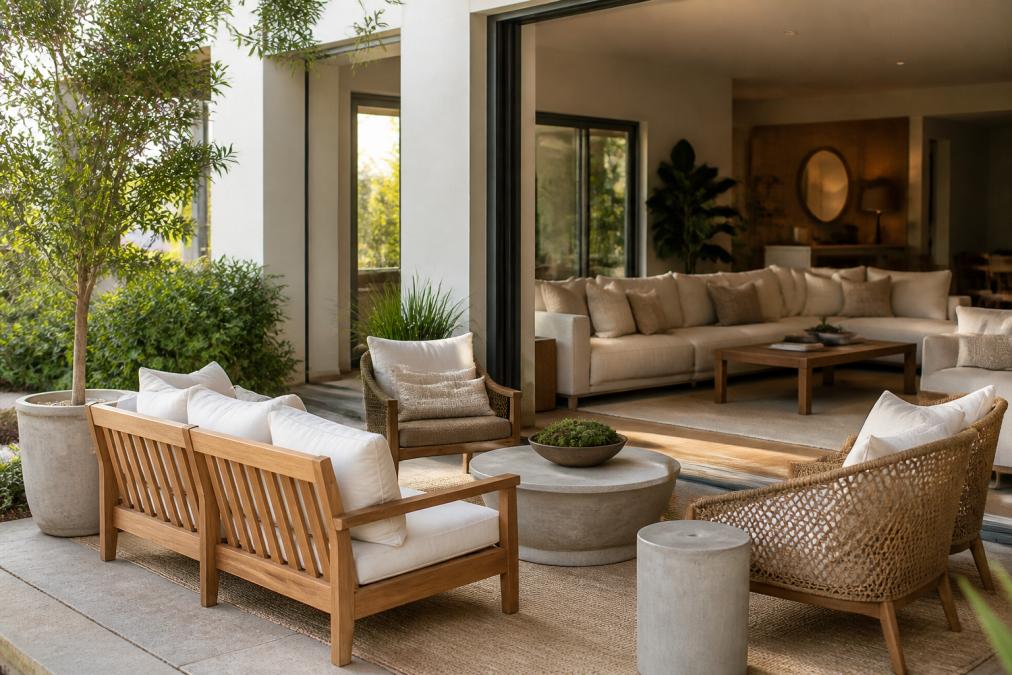
When you mix indoor outdoor furniture, the transition between indoors and outdoors should feel intentional, your interior and exterior aesthetics should share DNA.
Hanging Egg Chair, Outdoor Indoor Swing →
If your living room features mid-century modern lines and warm wood, your patio should echo those qualities with the same wood species and similar silhouettes.
Scale and proportion matter enormously. Match visual weight to environment, oversized pieces dwarf small patios; delicate pieces look fragile outside.
Create flow through consistent color families, repeated materials, similar design eras, and layered textiles that bridge spaces.
The Hanging Egg Chair ($486.38) works on a patio or in a bedroom, providing visual continuity with clean lines and neutral frame.

Arrange pieces to encourage movement and conversation. Create defined zones, dining near the door, lounge deeper into the patio, to prevent random appearance.
How to Style a Patio for Hospitality and Daily Living
Start with a focal point, fireplace, water feature, or statement piece, that organizes the space around it.
Layer design: foundation (sectionals, dining tables), secondary elements (accent chairs, side tables), accessories (rugs, pillows, planters).
The Alora Indoor-Outdoor Patio Concrete Round Coffee Table ($648.95), solid concrete with minimalist design, anchors seating while protecting flooring with non-marking leveling feet.

For hospitality spaces: multiple seating heights, adequate side tables, ambient lighting, weather protection, and accessible pathways.
Personalize daily living spaces to match your lifestyle, prioritize seating for entertaining or a quality lounge chair for quiet mornings.
Maintain Your Mixed Furniture for Long-Term Durability
Maintenance determines whether your investment lasts five or fifteen years. Mixed materials create a maintenance ecosystem, some combinations are far more sustainable than others.
Material-Specific Care Protocols
Metal frames: Rinse after salt air or rain. Inspect powder-coating annually for chips; touch up promptly. In coastal climates, inspect every 6 months. Remove salt residue with soft-bristle brush. For existing rust, sand lightly, apply rust converter, and touch up with matching powder-coat paint.
Teak: Clean with mild soap and water twice yearly. Weathered teak requires no intervention. For honey tone, apply teak oil annually in spring, recommended in high-humidity climates. Use stiff brush to remove mildew before oiling.
Cushions: Remove and store during heavy rain or off-season. Wash covers with mild soap and water. Dry completely before returning, this prevents mildew and extends life 2-3 years. In humid climates, air-dry in direct sun for 4+ hours to kill mildew spores.
Concrete and stone: Seal annually. Clean with pH-neutral cleaners only, acidic or alkaline products damage the surface. Avoid pressure washing.
Woven elements: Vacuum or brush regularly. Rinse if exposed to salt spray. Repair loose fibers promptly, tears spread quickly. In high-UV climates, apply UV-protective coating annually.
The Mixed-Material Maintenance Burden
Mixing materials with different maintenance needs creates a compounding time burden: teak needs annual oiling, powder-coated metal needs biennial touch-ups, cushions need seasonal care, concrete needs annual sealing, woven accents need quarterly brushing and annual UV protection.
Mixing all these materials commits you to a complex schedule. A single neglected element compromises the entire aesthetic.
Limit materials to 3-4 types with aligned maintenance schedules. Low-maintenance: composite + acrylic cushions + concrete (annual care only). Medium-maintenance: teak + Olefin + stainless steel (annual oiling, seasonal cushion care). High-maintenance: powder-coated metal + teak + acrylic (biennial touch-ups, annual oiling, seasonal care).
Document your maintenance schedule: spring (cushion washing, metal inspection, teak oiling), mid-season (rust, mildew, loose weave checks), fall (seal concrete, store cushions). Critical for hospitality where neglect accelerates failure.
Ergonomic Durability: Seat Height Harmony
Overlooked durability factor: ergonomic compatibility. Mixed pieces often have seat heights varying by 1-3 inches, causing visual awkwardness and accelerated wear.
Mismatched heights force posture adjustments, creating uneven pressure.
Creating a Sustainable Maintenance Calendar
The durability of your mixed furniture depends entirely on ongoing care. Quality pieces fail when neglected. Average pieces thrive with attention. Create a written maintenance calendar:
- Monthly: Brush debris from woven elements; rinse cushions if exposed to salt spray
- Quarterly: Inspect metal frames for rust; check concrete for stains
- Annually (spring): Wash cushion covers; oil teak frames; seal concrete; apply UV protection to woven elements
- Biennial (odd years): Inspect and touch up powder-coated metal; reseal concrete
- As-needed: Replace worn cushions; repair loose weave; sand and repaint rust spots
Common Mistakes to Avoid When Mixing Pieces
Mixing indoor and outdoor furniture successfully requires avoiding predictable pitfalls.
Frequently Asked Questions
Is it okay to mix and match outdoor furniture?
Yes, mixing outdoor furniture is not only acceptable but encouraged when done intentionally. The key is ensuring pieces share a cohesive design language through color, material, or scale. Mixing materials like teak with powder-coated metal or woven wicker with concrete creates visual interest while maintaining intentional design. Avoid random combinations; instead, select pieces that complement each other through a shared neutral palette or similar finish quality. This approach works especially well for creating sophisticated indoor-outdoor spaces that feel curated rather than mismatched.
Can you use indoor furniture on a covered patio?
Covered patios offer more protection, making them suitable for some indoor pieces, but durability still matters. Upholstered indoor furniture should have moisture-wicking cushions and frames that resist humidity. Avoid placing delicate wood pieces directly exposed to temperature swings or moisture. The best approach is selecting pieces designed for indoor-outdoor use, like the Arno Modular Side Chair with FSC teak and weather-resistant cushions. If using primarily indoor furniture, ensure adequate ventilation to prevent moisture buildup, and consider UV protection for fabrics that may receive filtered sunlight.
What materials work best for mixing indoor and outdoor furniture?
The strongest material combinations pair weather-resistant frames with durable upholstery. Teak, powder-coated steel, and concrete excel for structural pieces, while synthetic rattan and woven materials provide textural contrast. For example, the Bean Outdoor Patio Swing Chair combines synthetic rattan weave with a powder-coated steel frame and weather-resistant cushions. Pair these with indoor pieces made from similar materials or finishes to create visual cohesion. Avoid mixing untreated wood with outdoor pieces, and ensure all cushions and fabrics have UV protection and moisture-wicking properties for longevity.
How do you make indoor and outdoor furniture look cohesive?
Cohesion comes from intentional design decisions across three areas: color palette, material finish, and scale. Start with a neutral base palette (whites, grays, beiges) and add one or two accent colors throughout all pieces. Match finishes across spaces, if indoor furniture has matte black frames, repeat that in outdoor pieces. Ensure scale and proportion feel balanced; don't pair oversized sectionals with tiny side tables. Use layering through outdoor rugs, cushions, and drapery panels to create visual weight that mirrors interior design principles. This creates an indoor-outdoor flow that feels purposeful rather than random.