How to Maintain Luxury Outdoor Furniture: 2026 Guide
Table of Contents
- How to Maintain Luxury Outdoor Furniture: Material-Specific Care
- Teak, Wicker, and Aluminum: What Each Material Needs
- How to Clean Teak Outdoor Furniture
- Best Oil for Outdoor Teak Furniture: What to Use and When
- How to Protect Resin Wicker Furniture in Winter
- How to Clean Outdoor Furniture Cushions
- Repair or Replace? A Decision Guide for Aging Outdoor Furniture
- Hardware, Fasteners, and Eco-Friendly Cleaning Alternatives
- Frequently Asked Questions
Last Updated: October 8, 2026
How to Maintain Luxury Outdoor Furniture: Material-Specific Care
Learning how to maintain luxury outdoor furniture comes down to one idea: match the care to the material. Teak needs oil, resin wicker needs covering, and powder-coated aluminum needs gentle washing.
At Orvessa Global, we furnish patios, hotel terraces, and rental properties, so we see what lasts and what fails. The failures are rarely about bad luck. They come from using the wrong product on the wrong surface, or from skipping seasonal storage.
Below, we break down care by material, plus a repair-or-replace guide and a schedule you can actually follow. The American Society of Landscape Architects resource library is a useful starting point for anyone planning an outdoor living space.
Teak, Wicker, and Aluminum: What Each Material Needs
Each material has one core need, and getting it wrong is the most common mistake we see.
- Teak: Clean twice a year, oil once a year. Teak oil feeds the wood and slows moisture damage.
- Resin wicker: Rinse monthly, cover in winter. The weave traps dust, and moisture left inside causes mildew.
- Powder-coated aluminum: Wash with mild soap, never scrub. The coating is the rust barrier, so scratches matter.
- Performance fabrics: Brush off debris, spot clean fast. Stain repellent finishes fade if you scrub hard.
A common mistake is treating all outdoor pieces the same. Wicker and teak want opposite things. Teak likes oil. Wicker hates trapped moisture.
How to Clean Teak Outdoor Furniture
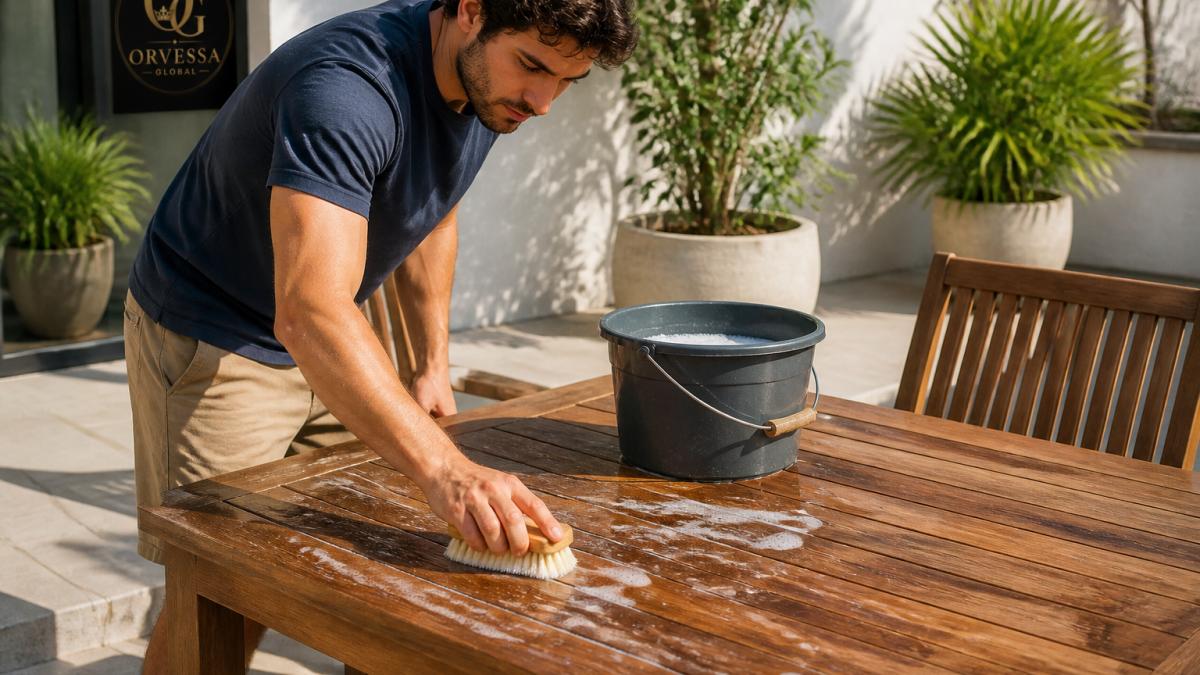
To clean teak outdoor furniture, mix a few drops of mild dish soap into a bucket of warm water, scrub along the grain with a soft-bristle brush, then rinse and let it air-dry. Never use a pressure washer, which raises the grain and dulls the surface.
Follow these steps:
- Rinse the piece to lift loose dust.
- Mix mild soap with warm water.
- Scrub gently along the wood grain.
- Rinse until the water runs clear.
- Let it dry fully in the sun.
Fresh teak starts golden-brown. Left untreated, it fades to a soft silver-gray patina. That patina is normal and harmless. It is a look, not damage.
Best Oil for Outdoor Teak Furniture: What to Use and When
The best oil for outdoor teak furniture is a purpose-made teak oil, applied once a year after a full clean. Apply it in spring, on a dry day, when no rain is forecast for 24 hours.
Here is how we would do it:
- Clean and fully dry the wood first.
- Apply a thin coat with a lint-free cloth.
- Wipe off any excess after 20 minutes.
- Let it cure for a full day.
A common mistake is over-oiling. Too much oil leaves a sticky film that collects dirt. One thin coat a year is plenty.
Skip oil entirely if you prefer the silver-gray patina. The wood stays structurally sound either way. Oil only changes the color.
How to Protect Resin Wicker Furniture in Winter
To protect resin wicker furniture in winter, clean it, dry it fully, and cover it or move it indoors before the first freeze. Moisture trapped in the weave is what causes mildew and cracking.
Our winter routine:
- Rinse the frame and weave with a hose.
- Clean crevices with a soft brush.
- Dry in direct sun for a full day.
- Cover with a breathable cover, or store indoors.
- Check monthly for trapped moisture.
Do not wrap wicker in plastic. Plastic traps condensation, which is the exact problem you are trying to avoid. Use a breathable cover instead.
Cold alone rarely damages resin wicker. Ice and standing water do. If you live where winters bring hard freezes, indoor storage is the safer call.
How to Clean Outdoor Furniture Cushions
To clean outdoor furniture cushions, brush off loose dirt, then spot clean with mild soap and warm water. Rinse well and let them air-dry standing on edge so water drains out. That basic routine works everywhere, but how often you do it, and what you reach for, should change with your climate.
Climate-Specific Cushion Care
Coastal (salt air): Salt residue pulls moisture into fabric and accelerates mildew. Rinse cushions with fresh water every two to three weeks during the season, not just when they look dirty.
Desert (intense UV): UV breaks down fabric dyes and weakens thread long before dirt becomes a problem. Rotate cushions weekly so sun exposure is even, and bring them inside during peak afternoon hours if your setup allows. A UV-protectant fabric spray reapplied each spring slows fading.
Humid: Mildew is the constant threat. Wipe cushions down weekly with a mild soap solution and dry them in direct sun whenever possible. Avoid stacking cushions against each other, airflow between them is what prevents mildew from taking hold.
Stain Removal by Type
| Stain | First Step | What to Avoid |
|---|---|---|
| Food or grease | Blot, then mild soap | Hot water, which sets grease |
| Mildew | Mild soap and water | Harsh bleach on colored fabric |
| Bird droppings | Rinse, then gentle scrub | Scrubbing while dry |
| Sunscreen | Blot, then cool water | Rubbing the stain in |
| Tree sap | Isopropyl alcohol on a cloth | Picking at it with fingernails |
| Red wine | Blot, then cool water and mild soap | Letting it sit before treating |
Check the care label before using any cleaner. Many performance fabrics have a stain repellent finish that harsh products strip away.
Eco-Friendly Cleaning Alternatives
Skip harsh chemicals. These household staples handle most cushion jobs without damaging luxury finishes or the environment:
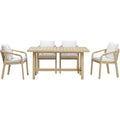
Outdoor Dining Set Built for All-Weather Entertaining, 360° Swivel Chairs →
- Mild dish soap and warm water: The default for routine cleaning and most food stains.
- White vinegar (diluted): Cuts light mildew and neutralizes salt. Use one part vinegar to three parts water.
- Baking soda paste: Lifts grime from textured weaves and cushions. Mix with a little water, apply, let sit ten minutes, then rinse.
- Oxygen-based bleach (color-safe): For stubborn mildew on light-colored fabric. Test on a hidden spot first.
These options are safer for plants, pets, and patios, and they work as well as most store-bought cleaners for routine care.
For deeper cleaning, most removable covers are machine washable on a gentle cycle. Air-dry them. Never put cushion covers in a dryer, because heat can shrink the fabric and weaken the seams.
Repair or Replace? A Decision Guide for Aging Outdoor Furniture
Repair aging outdoor furniture when the frame is solid and only the cushions, straps, or finish have worn. Replace it when the frame itself is cracked, rusted through, or wobbly at the joints. That is the short answer. The longer answer involves checking specific structural points most guides never mention.
The Structural Integrity Check
Before you decide, inspect these five points. If any fail, replacement is the safer call:
- Frame joints: Flex the piece gently. A solid frame stays rigid. A frame that creaks or shifts under light pressure has compromised joinery.
- Weld points (metal): Look for hairline cracks around welds, especially where legs meet the seat frame. Cracks spread under load.
- Rust penetration (metal): Surface rust is cosmetic. Rust that has eaten through the tube wall or created flaking edges is structural.
- Wood rot (teak and similar): Probe suspect areas with a screwdriver. Soft, spongy wood means rot has moved past the surface.
- Fastener condition: Rusted or stripped bolts that will not tighten indicate the frame has lost its ability to hold together.
Repair vs. Replace Decision Matrix
| What You See | Fix | Cost Level |
|---|---|---|
| Faded cushions | Replace cushions only | Low |
| Loose bolts or wobble | Tighten or replace hardware | Low |
| Surface rust spots | Sand and touch up paint | Medium |
| Cracked frame or joint | Replace the piece | High |
| Rot in structural wood | Replace the piece | High |
| Worn foot glides | Replace glides | Low |
| Failing swivel mechanism | Replace mechanism or piece | Medium to High |
The math usually favors repair. Replacing cushions on a solid frame costs far less than a new set, and it keeps a matched look across your space.
Hardware and Fastener Maintenance
Hardware is the part everyone forgets, and it is often what fails first. Bolts loosen, washers rust, and glides wear down. A yearly check takes ten minutes and prevents most wobbles.
Check these each season:
- Tighten all bolts and screws
- Look for rust on fasteners and replace as needed
- Check plastic foot glides for wear
- Test swivel and rocker mechanisms
- Oil metal joints lightly to prevent corrosion
When replacing fasteners, match the original material. Stainless steel is the standard for outdoor use because it resists rust far better than zinc-plated hardware. A mismatched bolt can introduce corrosion at the joint.
When to Call It
Structural integrity is the deciding factor. If the frame flexes or creaks under weight, stop using it. A collapsed chair is a safety risk, not just an eyesore. For pieces with sentimental or matched-set value, a local furniture repair shop can often re-weld a joint or replace a swivel mechanism for a fraction of replacement cost, but only if the surrounding frame is sound.
Hardware, Fasteners, and Eco-Friendly Cleaning Alternatives
Hardware is the part everyone forgets, and it is often what fails first. Bolts loosen, washers rust, and glides wear down. A yearly check takes ten minutes and prevents most wobbles.
Check these each season:
- Tighten all bolts and screws
- Look for rust on fasteners and replace as needed
- Check plastic foot glides for wear
- Test swivel and rocker mechanisms
- Oil metal joints lightly to prevent corrosion
For eco-friendly cleaning, skip harsh chemicals. Mild dish soap, white vinegar, and a baking soda paste handle most jobs. Vinegar cuts light mildew. Baking soda lifts grime from wicker and cushions.
These options are safer for plants, pets, and patios, and they work as well as most store-bought cleaners for routine care.
A good maintenance schedule keeps everything simple:
- Monthly: Rinse frames, brush off cushions.
- Seasonally: Deep clean, check hardware, treat teak.
- Before winter: Clean, dry, cover or store.
Durability comes from consistency, not from any single product. Small habits, repeated, are what protect your investment.
When you are ready to upgrade, our 5-piece metal outdoor dining set is built for exactly this kind of care.

Frequently Asked Questions
How often should I clean luxury outdoor furniture?
A quick rinse and wipe-down every two weeks keeps dust and pollen from settling into finishes. Deep clean teak, wicker, and cushions once per season, or more often if you live near the coast where corrosive salt air accelerates wear. Check hardware monthly for loosening and apply touch-up oil or sealant as needed to maintain structural integrity and appearance.
What is the best oil for outdoor teak furniture?
Look for a dedicated teak oil or a UV-resistant penetrating oil designed for outdoor wood. These products replenish the natural oils that UV degradation strips away and help maintain a golden patina. Apply thin coats with a lint-free cloth after cleaning, let each coat absorb, and wipe off excess.
How do I protect resin wicker furniture in winter?
Clean the wicker thoroughly with mild soap and water, then let it dry completely. If possible, move pieces into a garage or shed; otherwise, use breathable protective covers that allow airflow. Check fasteners before storing.
Can I use a pressure washer on luxury outdoor furniture?
Avoid pressure washing on teak, resin wicker, and performance fabrics. The force can raise wood grain, crack wicker strands, and push water into cushion foam where mildew can grow. Use a garden hose with a gentle spray, a soft brush, and mild soap instead.
Maintaining luxury outdoor furniture is not complicated, but it does take a routine. The pieces that last are the ones that get cleaned, covered, and checked on schedule, season after season.
At Orvessa Global, we help homeowners, designers, and hospitality teams furnish outdoor spaces built to hold up. Our curated collections, white-glove delivery, and dedicated account support take the guesswork out of sourcing durable, cohesive pieces. Learn more and find furnishings made to last.