How to Furnish Airbnb Units: 2026 Host Guide
Table of Contents
- Airbnb Furniture Checklist: Room-by-Room Essentials
- How to Furnish Airbnb Units on a Realistic Host Budget
- Choosing Durable Furniture for Vacation Rentals
- Luxury Airbnb Styling That Lifts Nightly Rates
- Where to Buy Furniture for Short-Term Rentals
- Tax Deductions, Depreciation, and Inventory Tracking
- Common Furnishing Mistakes That Cost Hosts Money
- Frequently Asked Questions
Last Updated: September 15, 2026
Airbnb Furniture Checklist: Room-by-Room Essentials
Furnishing a short-term rental starts with one question: what does a guest actually touch, sit on, and sleep in during a two-night stay? Answer that, and the checklist writes itself. This guide from Orvessa Global covers how to furnish Airbnb units room by room, with durability and turnover speed built in from day one.
An Airbnb furniture checklist is a room-by-room inventory of the items a short-term rental needs to be guest-ready, covering seating, sleep surfaces, dining, kitchen tools, and bathroom fixtures. The goal is simple: every guest need met, nothing wasted on items that rarely get used.
Living Room and Dining Essentials
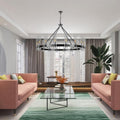
The living room carries the most visual weight in your listing photos, so start here. A sofa, loveseat, and accent chair form the core seating group. Add a coffee table, two side tables, and a dining table with chairs that seat at least four.
- Sofa or sectional, sized to the room
- Coffee table with a wipe-clean surface
- Dining table and four to six chairs
- Floor lamp and table lamps for layered light
- Wall art or one statement piece
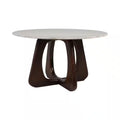
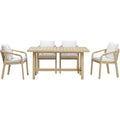
For compact units, a Scandinavian dining table set with upholstered chairs solves the space problem: it seats four to six without crowding a breakfast nook or open-plan living area.

Bedroom, Bathroom, and Kitchen Basics
Bedrooms need a bed frame, quality mattress, two nightstands, and reading lights. Bathrooms need towel hooks, a mirror, and a caddy or shelf for guest toiletries. Kitchens need cookware, dishware for the maximum occupancy, a coffee maker, and a kettle.
| Room | Must-Have Items | Skip These |
|---|---|---|
| Living room | Sofa, coffee table, lamps | Glass-top tables |
| Bedroom | Bed frame, mattress, nightstands | Oversized dressers |
| Bathroom | Towels, hooks, mirror | Fabric shower curtains |
| Kitchen | Cookware, dishware, coffee maker | Specialty appliances |
How to Furnish Airbnb Units on a Realistic Host Budget
A realistic furnishing budget separates essentials from upgrades, sizes spend to the unit's occupancy and nightly rate, and spreads cost across replacement cycles rather than one lump sum. Most practitioners find that sleep quality and seating durability justify the largest share of spend, because those are the two categories guests complain about first in reviews.
Build the Budget From the Unit, Not From a Catalog
Start with three inputs: maximum occupancy, target nightly rate, and expected annual booked nights. Those three numbers set the ceiling for what any single piece can cost and still pay for itself.
A common pattern for a one-bedroom unit sleeping two to four guests:
- Sleep and seating (roughly half of budget): mattress, sofa, dining chairs
- Case goods (about a quarter): bed frame, tables, storage
- Soft goods and decor (the remainder): linens, rugs, lighting, art
For a studio or one-bedroom, hosts frequently land in the low four figures for a full furnishing pass when buying mid-tier durable pieces; a three-bedroom that sleeps six to eight commonly runs two to three times that, driven mostly by additional beds, seating, and dishware for higher occupancy. Treat those as planning ranges, not quotes, vendor, season, and delivery fees move the number.
The Revenue-to-Cost Test
Price each piece against your nightly rate, not your personal taste. A simple rule: if a piece costs more than a few nights of revenue, it needs to survive several years of turnover to pay for itself. Run the math before you buy.
- Nightly rate × booked nights per year = annual gross revenue
- Target furniture spend as a share of first-year revenue (many hosts aim to recover furnishing cost within the first 12-18 months of operation)
- Divide remaining budget across rooms by guest-touch priority: bed, sofa, dining, then decor
Fund the Replacement Reserve From Day One
This is the part most budgeting guides skip: furnishing is an ongoing capital expense, not a one-time purchase. Set aside a fixed percentage of each booking's revenue, many hosts use a small single-digit share, into a reserve earmarked for furniture replacement. Without it, the first sagging sofa or stained mattress comes out of operating profit and stalls the next upgrade.
- Set nightly rate and target occupancy
- Cap total furnishing spend against first-year revenue
- Allocate by room using guest-touch priority
- Open a separate replacement reserve and fund it per booking
- Review the reserve annually against actual wear
Choosing Durable Furniture for Vacation Rentals
Durable furniture for vacation rentals is furniture built to survive frequent turnover, heavy use, and repeated cleaning without losing its finish or structure. The difference between a piece that lasts two years and one that lasts eight usually comes down to materials and construction, not price. But durability is only half the story, the other half is managing the replacement cycle so a worn piece never reaches a guest.
Materials and Replacement Cycles That Hold Up
Faux leather and performance upholstery resist spills and wipe clean in seconds between guests. Solid wood frames outlast particleboard. Metal legs handle more weight and traffic than tapered wood legs.
| Material | Typical Lifespan | Best Used For |
|---|---|---|
| Faux leather | 5-8 years | Sofas, dining chairs |
| Velvet (performance) | 4-6 years | Statement seating |
| Solid wood | 10+ years | Tables, bed frames |
| Metal | 8+ years | Legs, frames, outdoor |
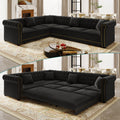
A three-piece faux leather sofa set in black and white handles high-traffic living rooms well, and the wipe-clean surface shortens turnover cleaning time.

The Wear-and-Tear Lifecycle Nobody Budgets For
Every piece in a short-term rental moves through four stages: new, serviceable, cosmetically tired, and functionally failing. The trap is that stages two and three look fine in person but read as worn in listing photos, and photo quality drives click-through more than any single amenity.
Set replacement triggers instead of waiting for failure:
- Mattresses: replace on a fixed cycle (commonly every 5-7 years in high-turnover units) or sooner if any guest review mentions sleep quality
- Sofas and upholstered seating: replace when cushions no longer recover their shape after cleaning, or when visible pilling appears in photos
- Dining chairs: inspect joints quarterly; a wobble that survives tightening means the frame is done
- Soft goods (linens, rugs, pillows): these wear fastest, budget for annual or biannual replacement, not multi-year
Turn Durability Into Inventory Management
This is the angle most furnishing guides skip entirely. Treat your furniture like a small asset register, not a one-time shopping list.
- Log every item with purchase date, cost, room, and expected lifespan
- Photograph each piece at purchase and again at each annual review
- Flag items entering the final year of their expected cycle
- Pre-fund replacements through the reserve described in the budgeting section
- Standardize models where possible so a replacement matches the existing set and photos stay consistent
Standardizing on a small number of repeatable models also pays off at tax time: a documented, consistent inventory is easier to depreciate and easier to defend if the property's use is ever reviewed.
Luxury Airbnb Styling That Lifts Nightly Rates
Color, Lighting, and Listing Photos
Where to Buy Furniture for Short-Term Rentals
Tax Deductions, Depreciation, and Inventory Tracking
Common Furnishing Mistakes That Cost Hosts Money
Other frequent errors:
IRS guidance on rental property depreciation
ADA accessibility standards for lodging
Frequently Asked Questions
How much should I budget to furnish an Airbnb?
Most hosts spend $3,000 to $6,000 per bedroom for a mid-tier setup, and $8,000 to $15,000 per unit for a luxury-standard finish. Budget separately for linens, kitchenware, and small appliances, which add another $800 to $1,500. A 3-piece faux leather sofa set at $999 or a Scandinavian dining set seating four to six at $599.99 anchors a living space without blowing the budget. Track every receipt so furnishing costs are easy to document at tax time.
What is the cheapest way to furnish an Airbnb without looking cheap?
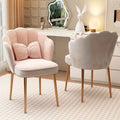
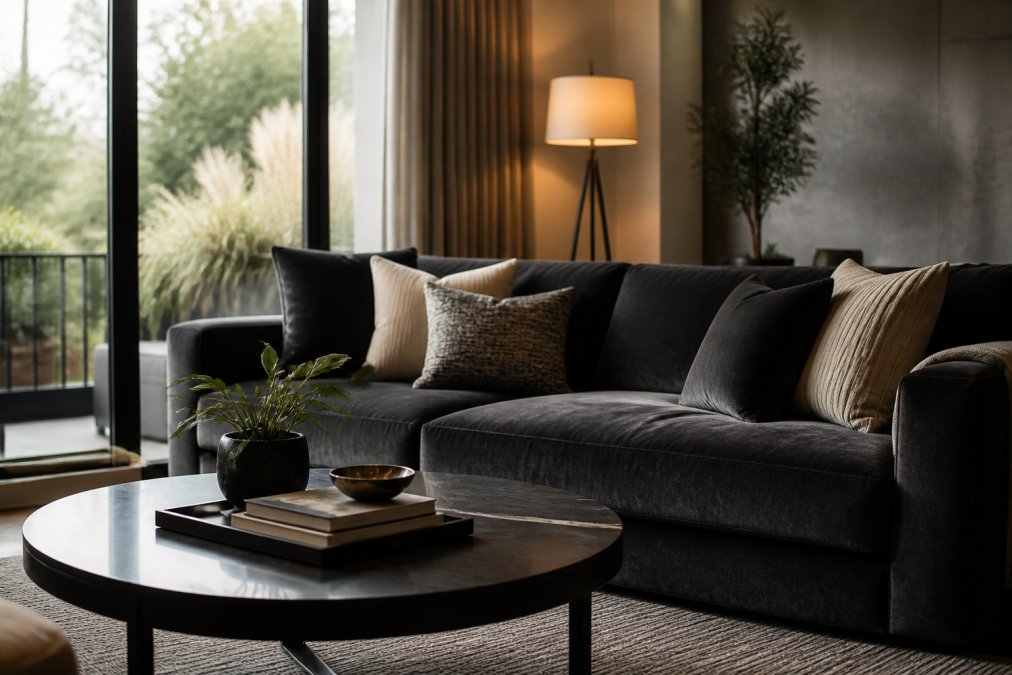
Buy fewer, better pieces and repeat the same palette in every room. Start with the items guests photograph most: the sofa, dining table, and bed. A coordinated 3-piece sofa set or a 2-piece velvet set does more for listing photos than ten mismatched accent pieces. Skip decor trends, thrift the small stuff like lamps and art, and spend on anything guests touch daily. Consistency reads as intentional design, not a tight budget.
Which furniture materials hold up best in a vacation rental?
Faux leather, performance velvet, and powder-coated metal frames handle heavy use better than linen or light-colored cotton blends. Look for solid wood or metal frames, foam cushions with removable covers, and stain-resistant upholstery. Avoid glass tabletops and white fabric sofas in high-traffic areas. Plan on replacing soft goods like pillows and throws every 12 to 18 months, and hard furniture every five to seven years depending on turnover.
Can I deduct furniture purchased for my Airbnb?
Yes, in most cases furnishing costs are deductible business expenses. Items under a set threshold, commonly $2,500 per item under IRS safe harbor rules, can be deducted in the year you buy them. Larger purchases are typically depreciated over five to seven years. Keep itemized receipts, photos, and a placement date for every piece. Confirm your specific treatment with a tax professional, since rules depend on how actively you manage the property.
Furnishing a rental that survives turnover, photographs well, and holds its value is a design and logistics problem at once. Orvessa Global solves both sides: curated collections that stay cohesive across multiple units, durable materials built for guest traffic, volume pricing for larger projects, and white-glove delivery with dedicated account support. Get started with Orvessa Global and furnish your next property with pieces that earn their keep.