Custom Furniture Solutions for Hotel Renovations
Table of Contents
- Why Custom Furniture Solutions Define a Successful Hotel Renovation
- Guest-Room Furniture and Casegoods That Withstand Heavy Use
- Lobby, Restaurant, and Public-Area Furniture: Matching Brand Identity
- Hotel FF&E Procurement: Budgeting, Value Engineering, and Brand Standards
- Hotel Room Furniture Packages: What to Include and How to Compare Costs
- Custom Furniture Lead Times: Planning a Phased Renovation Timeline
- How to Evaluate Hospitality Furniture Suppliers
- Accessibility, Safety, and Sustainability in Contract Furnishings
- Frequently Asked Questions
Last Updated: October 5, 2026
Why Custom Furniture Solutions Define a Successful Hotel Renovation
Custom furniture solutions for hotel renovations are pieces built to your property's exact dimensions, finishes, and durability requirements rather than bought off a catalog floor.
A hotel renovation is not a residential remodel with more rooms. It's a commercial project judged by brand standards, inspected against accessibility rules, and paid for out of revenue you're not collecting while rooms sit offline.
Guest-Room Furniture and Casegoods That Withstand Heavy Use
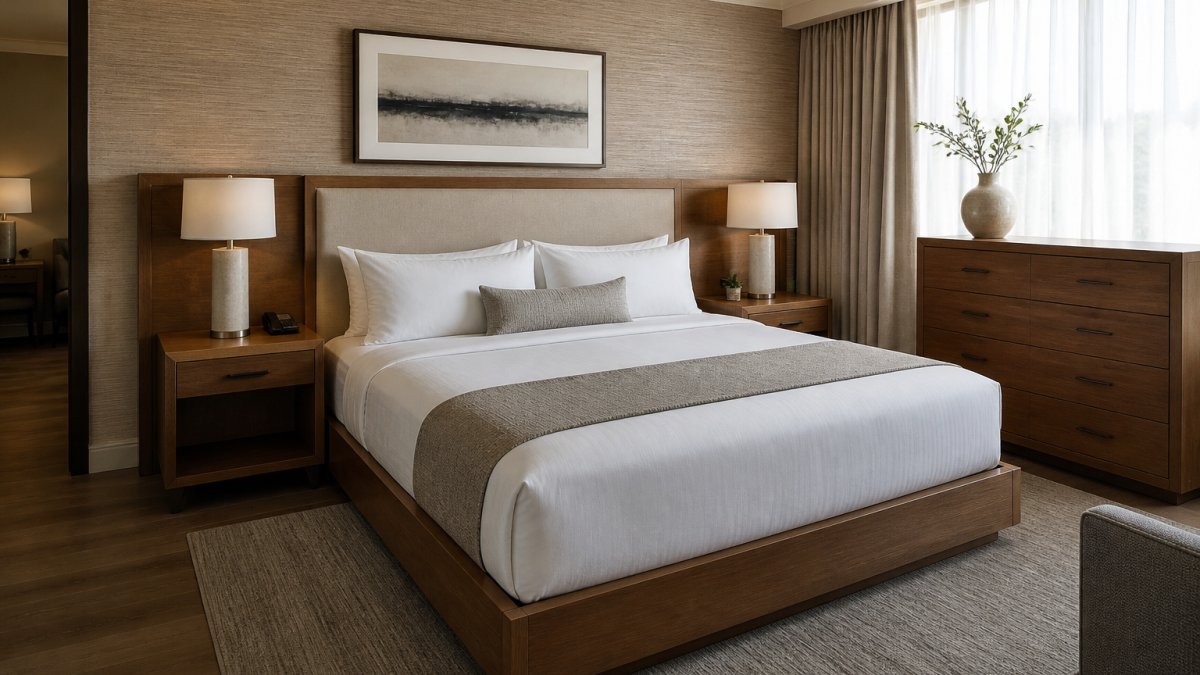
Casegoods are the hard furniture in a guest room: dressers, wardrobes, nightstands, and desks. In a hotel they take punishment a home never sees, drawers yanked, wardrobe doors slammed, desk edges dragged against suitcases.
The finish matters as much as the frame. A durable laminate resists heat, scratches, and staining and wipes clean with a damp cloth, the maintenance profile housekeeping needs.
For guest rooms, look for pieces that solve two problems at once.
What to Replace First in a Guest-Room Refresh
Start with the pieces guests touch most and that wear fastest: bed frame and headboard, then desk and seating, then storage. Mattresses and soft goods follow the hard furniture.
Lobby, Restaurant, and Public-Area Furniture: Matching Brand Identity
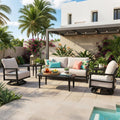
Public areas are where a brand refresh lands or falls flat. Lobby desks, lounge seating, and restaurant furniture are the first things a guest photographs and the last they forget.
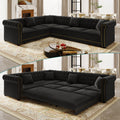
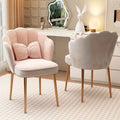
Lounge seating has to do double duty: structure to survive high-traffic use and cushioning for a long wait.
A front reception desk sets the tone before a guest says a word.

Hotel FF&E Procurement: Budgeting, Value Engineering, and Brand Standards
FF&E stands for furniture, fixtures, and equipment: the movable, non-structural assets a hotel buys, tracks, and eventually replaces. Hotel FF&E procurement is specifying, sourcing, budgeting, and installing all of it against brand requirements and a fixed opening date, less a shopping exercise than a project-management discipline.
Value engineering is where budgets are won or lost. It doesn't mean buying cheaper furniture; it means finding the spec that meets the brand standard at the lowest lifecycle cost.
A practical way to frame the trade-off:
| Decision | Cheaper Now | Cheaper Over Time | What Decides It |
|---|---|---|---|
| Finish | Laminate | Solid hardwood | Cleaning labor and replacement cycle |
| Upholstery | PU leather | Genuine leather | Spill frequency in the space |
| Casegoods | Stock size | Custom fit | Room dimensions and brand standard |
| Seating | Fixed layout | Modular | How often the space gets reconfigured |
How to Read a Property Improvement Plan (PIP)
A property improvement plan is the document a brand issues to a franchisee listing changes required to meet current brand standards. Read it as a scope document, not a wish list: it tells you which items are mandatory, which have deadlines, and which are negotiable. Every furniture line should map to a budget line and a lead time before you order.
Hotel Room Furniture Packages: What to Include and How to Compare Costs
Hotel room furniture packages bundle everything a room needs into one coordinated order: bed, casegoods, seating, and sometimes lighting. Packages usually cost less than sourcing piece by piece and guarantee the room looks intentional rather than assembled from three vendors' catalogs.
A complete package for a standard room typically covers:
- Bed frame and headboard, sized to the room
- Nightstands, ideally integrated or matched
- Dresser or wardrobe for guest storage
Compare whole package against whole package, not piece against piece. A slightly higher package price that includes integrated storage and a durable laminate finish can beat a cheaper line item once you factor in replacing it in three years.
Custom Furniture Lead Times: Planning a Phased Renovation Timeline
Custom furniture lead times are the interval between placing an order and receiving installable product, the most common reason hotel renovations slip.
A custom hospitality order typically moves through five stages, and each one has its own clock:
- Design and submittal. Drawings, finish samples, and material specs go to the brand or ownership group for approval. This is where revisions happen and the stage most often underestimated, because it depends on someone else's review queue.
- Sample and mock-up approval. A finish sample, hardware sample, or full mock-up piece is produced and signed off. Skipping this to save time usually costs more later when a finish reads wrong across 200 rooms.
- Production. The factory builds to the approved specification. Custom dimensions, non-standard finishes, and integrated features add time; stock sizes and standard finishes subtract it.
- Freight and staging. Finished goods ship and are staged near the property. Long-haul freight, port delays, and receiving-dock scheduling all live in this window.
- Installation. Crews place, level, and punch-list the pieces floor by floor.
A phased approach keeps revenue flowing: take one floor or wing offline at a time, install, and reopen before moving on.
| Phase | Typical Focus | Why This Order |
|---|---|---|
| 1 | Public areas and lobby | Longest lead times, highest guest visibility |
| 2 | First guest-room floor | Test durability and finish before scaling |
| 3 | Remaining guest-room floors | Repeat the proven specification |
| 4 | Restaurant and back-of-house | Least disruptive to room revenue |
Treat the durations as planning placeholders, not promises. Confirm actual lead times with your supplier in writing before you commit to a reopening date.
Building the Backward Schedule
Work backward from the reopening date, subtracting each stage: lock the design and submittal package, hold production until the mock-up is signed off, then release freight once the receiving dock and install crew are confirmed. The two dates that most often break a schedule are the brand's submittal approval and the mock-up sign-off, since both sit outside the supplier's control.
Three scheduling rules that prevent most overruns:
Taviel · Front Reception Desk →
- Never release full production before the mock-up is approved. A single approved sample piece is cheaper than reworking a full floor.
- Sequence public areas before guest rooms. Lobby and restaurant pieces carry the most customization and the longest lead times, so starting them first keeps the critical path moving while room-level finishes are finalized.
- Stage by floor, not by item type. Delivering all the beds, then all the desks, then all the seating creates three separate installation passes and three times the disruption. Deliver complete rooms.
Minimizing Room Downtime
Every night a room is offline is a night it doesn't earn. Phasing by floor or wing keeps the maximum keys sellable at any moment. Install during low-occupancy windows and keep a small block of rooms out of rotation rather than taking a whole floor down.
How to Evaluate Hospitality Furniture Suppliers
Hospitality furniture suppliers differ from residential retailers in three ways: they build to commercial durability standards, understand brand compliance, and can deliver and install at volume.
- Can they confirm the finish resists heat, scratches, and staining, and how it's cleaned?
- Do they offer customization or only stock sizes?
- What certifications back the build, such as ISO-9001 for quality or ISO-14001 for sustainability?
What most guides miss is the last point. A generic account manager handling residential orders won't flag that your desk height misses an accessibility standard or that your lounge fabric won't survive a lobby.
Specification and Quality-Control Checklist
A supplier's answers matter less than the documents behind them. Before you release production, confirm the following are in the package and reviewed:
Drawings and specifications
- Dimensioned shop drawings for every custom piece, including clearances and counter heights
- Material and finish schedule naming the exact substrate, laminate or veneer, edge banding, and hardware
- Upholstery specification with fabric content, abrasion rating, and cleaning code
Samples and mock-ups
- Physical finish samples for every surface, approved against the brand standard
- Hardware and pull samples, since these are the parts guests touch most
- A mock-up piece or mock-up room signed off before full production release
Testing and certification
- Written confirmation of finish performance for heat, scratches, and staining
- Quality and environmental certifications, such as ISO-9001 and ISO-14001, with certificate numbers
- Flammability or material-performance documentation where the space requires it
Warranty and service
- A written warranty stating term, coverage, and exclusions in plain language
- A named contact for warranty claims and a stated response window
- Replacement-part availability for hardware and wear items
Delivery and punch list
- A delivery and installation plan by floor, with staging and receiving-dock requirements
- A punch-list process with a defined cure period for defects
- A closeout package with as-built specs, finish schedule, and care instructions for housekeeping
Scoring Suppliers Against the Same Standard
Score every supplier on the same five dimensions so the comparison is apples to apples: specification completeness, sample and mock-up discipline, certification evidence, warranty terms, and installation capability. A supplier who can produce the full document package on request is a different risk than one who answers from memory. Ask for the warranty and certification documents in writing before award, not after.
Accessibility, Safety, and Sustainability in Contract Furnishings
Accessibility compliance isn't optional, and it's cheapest when designed in.
Safety and sustainability overlap more than people expect. A piece built to last and repaired rather than replaced generates less waste over a decade than three cheap replacements.
The practical takeaway: specify for the life of the asset, not the life of the budget cycle. Reference the U.S. Department of Justice ADA Standards for Accessible Design when confirming dimensional requirements, and treat durability certifications as a procurement filter, not a marketing line.
A hotel renovation has a fixed opening date, a brand standard to satisfy, and rooms that stop earning the moment they go offline.
Frequently Asked Questions
What furniture should be replaced during a hotel renovation?
Prioritize items guests touch and judge most: mattresses, casegoods (nightstands, dressers, desks), seating, and lobby reception furniture. Guest-room furniture packages typically cover beds, nightstands, dressers, desks, seating, and wardrobes. Public-area furniture such as lounge seating and reception desks follows brand standards. Replace anything showing structural wear, wobbling joints, or fabric damage that cleaning cannot fix.
How do you choose durable furniture for hotel rooms?
Look for contract-grade construction: solid frames, durable laminate or hardwood finishes, and upholstery that resists spills and wear. Laminate finishes that resist heat, scratches, and staining hold up well in guest rooms. Check warranty terms and production certifications. Pieces built to commercial standards outlast residential furniture, which lowers replacement costs over a typical renovation cycle.
What is included in hotel FF&E?
FF&E covers furniture, fixtures, and equipment: beds, casegoods, seating, lobby and restaurant furniture, lighting, and similar movable items. In hotel FF&E procurement, you budget these separately from construction. A property improvement plan (PIP) from the brand usually lists required FF&E updates. Grouping items into hotel room furniture packages simplifies ordering and helps control per-room costs.
How long does custom hotel furniture take to design and manufacture?
Custom furniture lead times vary by scope and customization level. Standard catalog pieces typically ship faster than fully bespoke designs, which need design approval, production, and quality checks before delivery. For a renovation, confirm lead times in writing before signing and align delivery with your phased installation schedule. Order early for lobby and public-area pieces, which often anchor the guest's first impression.
How can hotels furnish rooms during a phased renovation?
Renovate in blocks: complete a floor or wing, reopen it, then move to the next. This keeps revenue flowing and spreads furniture deliveries across the project. With custom furniture lead times confirmed up front, you can schedule each phase's delivery to arrive just before installation. Phased installation also reduces storage needs and limits guest disruption to smaller areas at a time.
How do hotels compare hospitality furniture suppliers?
Compare on five points: product durability and materials, brand-standard compliance, lead times, pricing transparency, and support. Ask for written lead times, warranty terms, and references from similar projects. A supplier with dedicated account management and white-glove delivery reduces installation risk. Review their catalog depth too, since cohesive collections matter when furnishing multiple rooms or properties.
Is custom furniture worth it for a hotel renovation?
Custom furniture pays off when standard pieces cannot meet your brand standards, dimensions, or durability needs. It lets you match finishes across guest rooms, lobbies, and restaurants for a cohesive look. The trade-off is longer lead times and higher upfront cost. Weigh that against lifecycle cost: contract-grade custom pieces often outlast cheaper alternatives, reducing replacements between renovations.